A phased approach restores VAV rooftop performance before winter sets in.
KS Partners brought in FMC Technologies to fix the VAV rooftop controls at 300 Granite Street: cut operating costs, stop the equipment failures, and keep tenants comfortable. Four phases, with Phase I done before winter.
- Client
- KS Partners
- Location
- Braintree, MA
- Sector
- Commercial office
- Year
- 2018
- Scope
- VAV rooftop controls + building-wide EMS
The complaint.
High operating costs, repeated failures, and unhappy tenants.
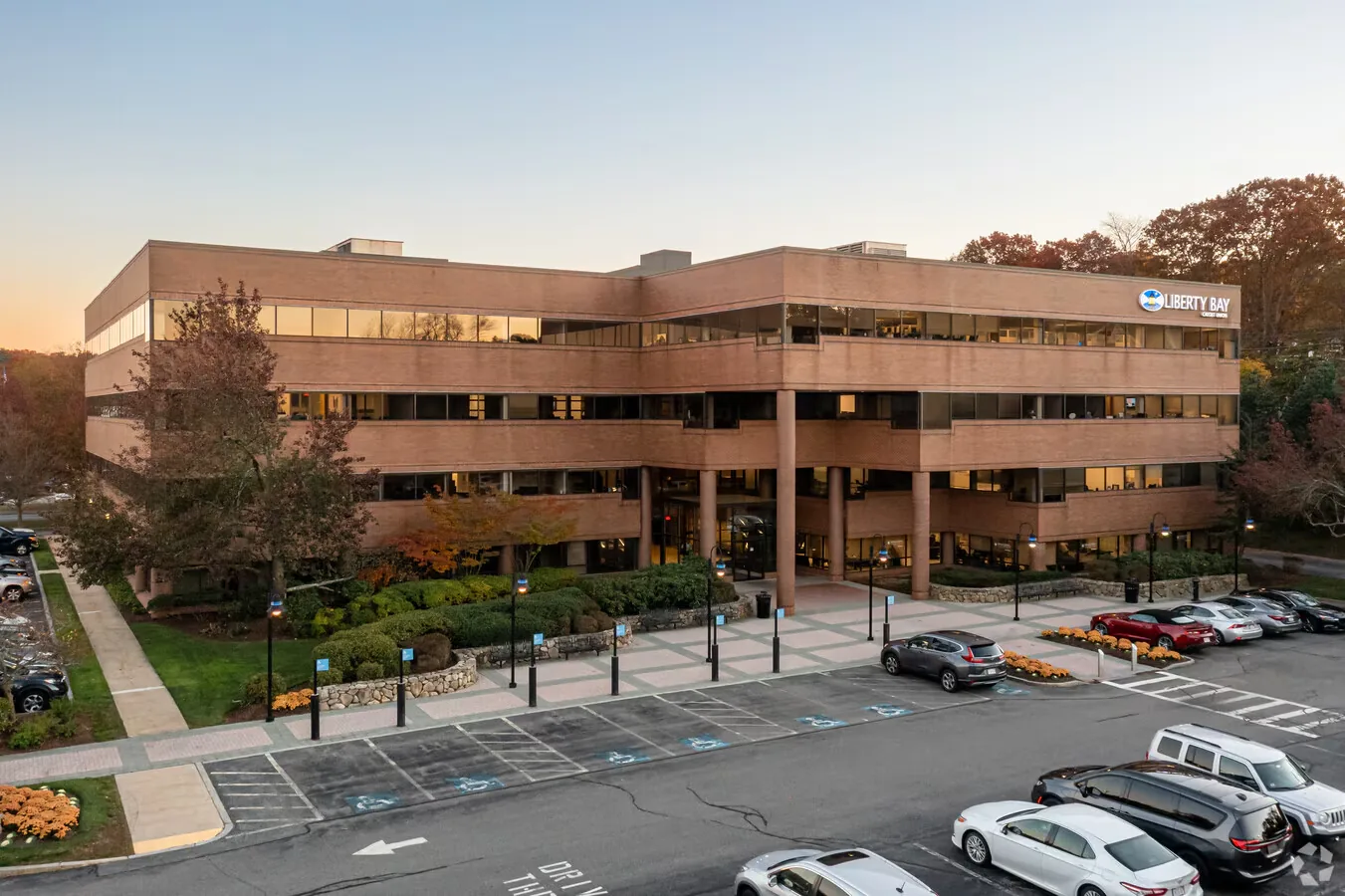
In 2018, KS Partners acquired the commercial office building at 300 Granite Street in Braintree, Massachusetts. The problems surfaced immediately: high HVAC operating costs, excessive equipment failures, and a poor tenant experience. All of it traced back to the control of the variable air volume (VAV) rooftop units.
What stood in the way
- High HVAC operating costs from the day of purchase
- Equipment failing far more often than it should
- A poor experience for the tenants in the building
- Every symptom traced back to the VAV rooftop unit control
What we found.
A control system missing several key control points.
The rooftop units' control system was missing several key control points. It could not precisely control the units' 12 stages of cooling, the electric heat, or the economizer, and the system was running far below manufacturer specifications.
Where the gaps were
- 12 stages of cooling with no precise control
- Electric heat outside the control system's reach
- The economizer running without proper control
- The whole system far below manufacturer specifications
The control system was never fully installed and did not follow the manufacturer's load/unload sequences. The improper cycling damaged several compressors.
The economizer dampers ran on harsh, binary on/off control instead of modulating with outdoor and indoor air conditions as intended.
The terminal boxes had no direct digital control. That ruled out localized control and night set-back, and it hurt the operation of the whole system.
What we did.
Fixed the rooftop controls first, then built the EMS on top.
FMC designed a fix for the VAV rooftop units and rolled out a building-wide EMS around it, in four phases, because getting Phase I done before winter mattered more than getting everything done at once. The tenants didn't notice the work. They noticed the building stopped swinging between hot and cold.
Why it ran in phases
- Phase I had to land before winter set in
- The work was planned around a fully occupied building
- Each phase left the building better than it found it
- Fixing the control faults first made the EMS install clean
FMC installed the missing control points and staged the compressors to the rooftop unit manufacturer's specified sequences. That stopped the damaging cycling and opened up energy savings opportunities.
FMC set up enthalpy-based economizer changeover, with more efficient settings that account for humidity, and installed resets ready to connect to the EMS in the final phase.
As a stopgap, FMC added zone-based scheduling and night setbacks to carry the building until the EMS installation in the final phase.
With the groundwork from the earlier phases in place, the building-wide EMS went in cleanly: one platform for the whole building and a base for future energy work.
The result.
A comfortable building from Phase I on, and a platform for what comes next.
The building held a comfortable interior temperature immediately after Phase I, and the tenants' indoor environment improved substantially: steadier thermal control and fewer HVAC-related failures.
The early phases also set up the ending. Because the foundational control issues were fixed first, the transition to the final phase's building-wide EMS was straightforward, and the building now has a platform for future energy work.
Where it goes from here
- Steadier thermal control across the building
- Fewer HVAC-related failures to chase
- Compressors no longer cycling themselves to damage
- One EMS platform ready for future energy work
Have a building that needs to be fixed before winter?
Phased retrofits are our bread and butter, and we're used to working around tenants, budgets, and deadlines that don't move.